Section 01
Why invasive species are a property problem
Invasives are not just weeds. In Indiana woodlands they take the understory, change the soil, and starve the next generation of oak and hickory. Once a stand is closed in, you lose access, timber, wildlife cover, and the groundcover that holds soil on a slope.
Brown County sits in unglaciated southern Indiana hills. Fence rows, hollows, and oak-hickory ridges are the exact places bush honeysuckle, autumn olive, and multiflora rose do their best work. The same pattern shows up across the state, and on most private acres the first sign is simple: you cannot walk the woods you used to walk.
Species that dominate Brown County and Indiana woods
Bush honeysuckle
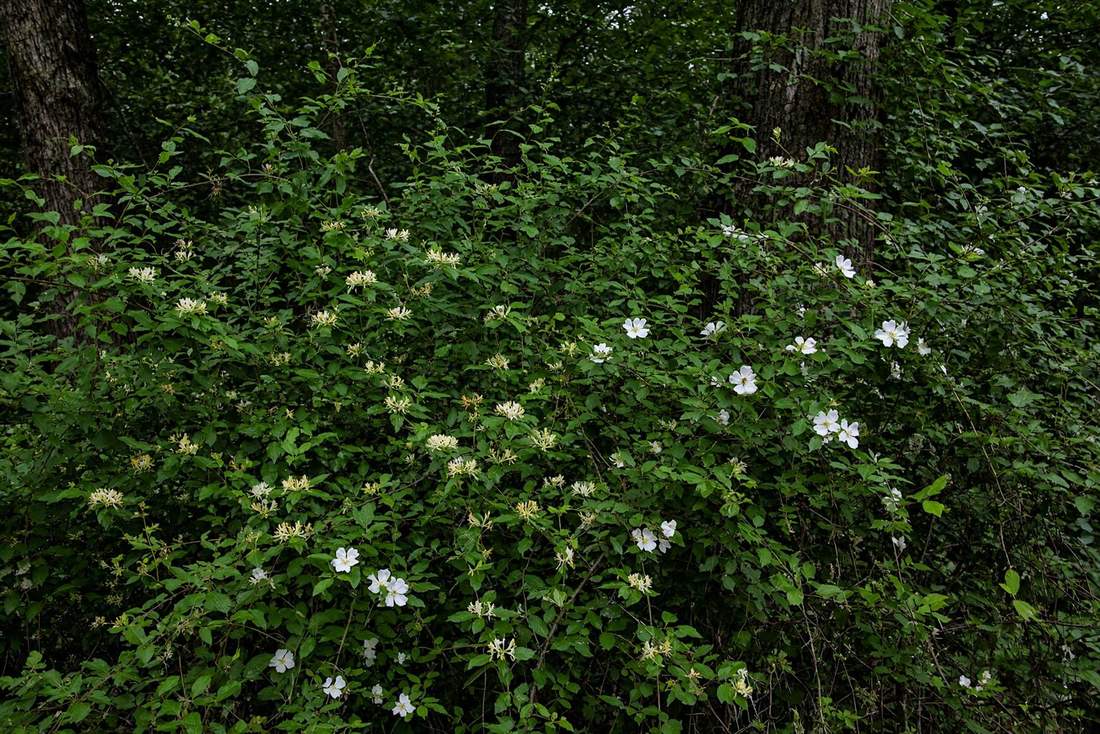
Amur, Morrow, and Bell’s honeysuckle form a wall of shrubs. Indiana DNR notes they shade the forest floor so hard that little remains but bare dirt.
Multiflora rose
Planted for livestock fence and erosion control. Now one of the most widespread invasives in the state. Thorny thickets lock up fence lines and woods.
Autumn olive
Nitrogen-fixing shrub that changes soil chemistry and crowds out natives in old fields, roadsides, and woodland edges.
Callery pear, tree of heaven, privet
Bradford pear, Ailanthus, and privet fill gaps after disturbance. Japanese honeysuckle, garlic mustard, and stiltgrass take the ground layer.
Native plants, wildlife, and soil
Oak, hickory, and native wildflowers need light at the forest floor. A honeysuckle layer cuts that light and, in some species, adds chemicals that suppress other plants. Seedlings fail. The stand looks wooded from the ridge, and empty underneath.
Wildlife follows the plants. Fewer native insects, fewer nesting sites, and a berry crop that feeds birds in fall then spreads the next wave of invasives. Deer concentrate browse on the native stems that are left. What looks like “cover” is often a trap for the habitat you wanted.
Soil is the piece most people miss. When the native groundcover is gone, rain hits bare dirt. On Brown County slopes that means sheet erosion, washed-out trails, and silt in the creek. Multiflora rose was even promoted as an erosion planting, then became the problem it was supposed to solve. A mulch layer after mechanical work is the opposite: it covers the soil while the stand opens.
Light
Understory shade
Invasives capture the sun before oak seedlings can.
Food
Wildlife gap
Native insects and cover decline as the shrub layer takes over.
Soil
Bare ground
Lost groundcover on steep hills speeds erosion into the hollows.